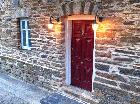
Randell's Mill Bed & Breakfast
Newly renovated it has all modern facilities whilst retaining the charm and heritage of yester year featuring recycled timber, original stonework and red gum. Embrace the romantic warmth of the wood heater, unwind and relax, listen to music, watch a DVD on the wide screen TV with surround sound, or just read a book.
Upstairs there’s a large bedroom with a king size bed. Relax and enjoy the beautiful two-person spa in your elegant bathroom. Every effort has been made to provide you with tasteful luxury accommodation, including a well-equipped kitchen. Private access with undercover parking, quality provisions provided for a cooked breakfast plus a gift basket on arrival for bookings of two nights or more are just some of the welcoming conveniences.
Enjoy a glass of wine from the local wineries, browse the local shops, pick up some fresh country produce if you wish and cook your own meal in your peaceful private garden with barbeque facilities. Refresh your senses, listen to the sounds of pure country life as you retreat in your own private fern garden and pergola area watching the blue wrens frolic in the garden. Escape to the peace and quiet of the countryside, explore the Heritage Walking Trail, visit the near by Barossa Valley, or just relax, while away the hours and unwind.
Minimum two night booking applies on weekends.
Due to water features this accommodation is not suitable for small children
FYI: A brief History; The town of Gumeracha is roughly 40 kilometres east of Adelaide on land that was selected by the South Australian Company during the early 1880’s. Randell’s Mill was constructed under the management of pioneer William B. Randell (1799-1876) who at that time was employed by the South Australian Company. Mr. Randell’s interest in milling was evident during these times as archival letters indicate Mr Randell’s enthused consideration of partnering with George Angus in establishing a series of flour mills in South Australia.
Although the partnership never eventuated much to William Randell’s dismay, he forged ahead and sited a location near the banks of Kenton Creek in between Salem and Kenton Hills. In 1844 he wrote to Manchester in England to order equipment for the flour mill. Completed in 1849 with two foot thick solid bluestone walls and at its completion excess of thirty foot ceilings – the mill began its chequered history. Mr Randell employed his son as overseer of the mill, which by that time showed considerable promise as a successful venture. Trading under the name of ‘W.B. Randell & Son.’
Structurally at this time the mill was compromised of three floors with a chain hoist through the middle which was operated by a windlass on the top floor. Also an old engine with a very large flywheel and shaft that turned a number of cogs - all of which were made of wood were known to be part of the working machinery. Unfortunately a great majority of the machinery has long gone along with the great chimney stack. Only a couple of remnants of machinery remain in the private living areas of the mill today.
Milling ceased in 1874 and after the death of Mr Randell the property became a butter and cheese factory under a cooperative of local investors some time after. However the enterprise was not a success and came under private management.
On the 10th February 1912 the mill was partially destroyed by fire. With the roof collapsing, the top floor caving in, some of the superstructure and most of the machinery being lost the mill was left in a state of disrepair for a period of time. The local children enjoyed the remains as a playground and hide and seek venue.
It was sold in 1923 to the then AMSCOL Company as a depot for milk collection until daily city deliveries made the property redundant. However it can be surmised that the first two thirds of the building was re-roofed at the second story and some form of cold store was in place.
Once again the building was left deserted until 1947 when it was purchased and used as a slaughter house until 1977. Local graziers would deliver their stock to the township end of the building where there was a race and holding yards. The stock would then be driven up and into the building for processing. Changes in the meat processing industry and the introduction and enforcement of hygiene standards also made this endeavour redundant.
In 1978 Mr Peter Brokenshire, came across the mill and commissioned architects to reconstruct and restore the building. Grave doubts were held as the remains of the building not only seemed structurally doubtful but the lingering mess and smell of the slaughterhouse left much to be desired.
However Mr. Brokenshires’ tenacity held out. The historical Randells Mill though 150 years old was still very sound and in 1979 the Mill was successfully completed to how it stands today. The Brokenshire family used the Mill as an art gallery focusing on contemporary and ethnographic art.
In keeping with the historical value of the Mill and the success of the restoration, at the end of 1979 Randells Mill was formally opened by the then Lieutenant Governor Sir Walter Crocker.
In 2006 there was yet another stage in the mill’s interesting history. Randell’s Mill opened as an executive Bed and Breakfast. Part of the Mill was restored using red gum, recycled timber, wrought iron and cathedral glass to enhance and compliment the old stone walls, resulting in a very modern and tastefully decorated self contained Bed & Breakfast, while the remainder continues as the private residence of the owners.
Bronnie & David Nash purchased the Mill late 2008. Their love of local history, people, and country life provide the perfect atmosphere for private luxury Bed & Breakfast accommodation. Their aim is to continue loving and caring for the historical Randells Mill whilst sharing the history and experience with others.
Contact Details
Enquire Online
This form is for genuine enquiries only. Your IP address will be recorded
Details
This page was last updated: 04 December 2009
|